Chapter 16: Awards and Achievements

As I near the end of my Overnite career, I believe it’s fitting to list some of the achievements I earned during my time there. I’m not one to boast, but the story wouldn’t be complete without mentioning them.

Additionally, I must share that in 2008, my wife and I’s hometown of Columbus, Indiana, was hit with “The 100-Year Flood.” Unfortunately, all my awards and memorabilia from Overnite—including letters of recommendation, safety achievement certificates, and other mementos—were destroyed in the flood.

Nevertheless, here goes: Between 1985 and 1994, I earned five years of safe driving awards and eight years of safe work awards. I also received my 10-year service award.

I participated twice in the Indiana Motor Truck Association Truck Rodeo. The first time was around 1984, where I competed in the flatbed classification and was awarded the Rookie Award. The second time was in 1986, when I participated in the straight truck classification and took third place. Only first and second place winners advanced to the Nationals.

With all that said, I couldn’t have been more proud to have represented Overnite—the only LTL company I truly loved working for. It’s truly an honor to include this story in my writing at this time.


#OverniteTransportation #AwardsAndAchievements #TruckDriving #SafeDriving #TruckingAwards #IndianaTruckRodeo #CareerMilestones #TruckDrivingAchievements #ProfessionalDriver #TruckingLife #SafeWork #Honors #CareerHighlights #TruckersOfInstagram #IndustryRecognition #SafetyFirst #ProudDriver #LTLFreight #TruckingHistory #WorkEthics #DriverRecognition #IndustryAwards #TruckingCommunity #Memories #CareerJourney

Support the Author
If you’ve enjoyed reading about my journey this far, please consider supporting my work. Your support helps me continue sharing stories like this.

PayPal: paypal.me/jonesg6257

Cash App: $GeraldJones6257

Venmo: @Gerald-Jones-194

Zelle: teddybear_46158@yahoo.com

Chapter 17: The End of the Road At Overnite

So, here I am, beginning probably the hardest chapter I’ve ever written, and I’m dreading every word of it. When I started this book, I was excited about each chapter I wrote, but not so much this one. All I can say is that when Herb Gardner took that corner office, the morale among drivers plummeted—my personal opinion, and no one else’s. But then, my opinion was the only one that mattered.

I started contemplating a move around 1992. A company called American Freightways entered Indianapolis in 1982 and began growing rapidly. In 1992, I submitted an application, but according to rumors in the grapevine, former Overnite employees gave me a bad recommendation.

So, I started talking to Conway Central Express drivers. I talked and talked for about two years. But more on that later. The key point was that I avoided union companies for one reason—because I didn’t think I needed anyone to protect my job. More on that later, too.

The pressure, disappointment, and unbelievable misery inside me kept worsening day by day. By September, I knew I could hold off until September 21st—my 12-year anniversary of being hired. On that day, I went directly to see Charles, who was now the Operations Manager. I told him I needed to talk. I poured out my heart about everything I was feeling and thinking, and he listened very carefully. My eyes welled up because I’m an emotional person, and I was genuinely hurting about the situation. I’ve never been good at adapting to change, as I stated earlier in my chapters. Since Union Pacific and Mr. Gardner arrived, the close-knit family feeling at Overnite had slowly diminished. Most people adapted, but with my childhood and upbringing, I simply couldn’t.

After I finished, Charles looked me in the eye and asked, “Are you positive this is what you really want?” I asked, “Let me ask you one question, Charles: you know how good everything was here just a few years ago? Do you honestly think it will get any better?” He replied, “Gerry, I really don’t believe it will.” I got up, shook his hand, and told him it had been a pleasure working with him. I thanked him for his honesty and left his office. I then went to dispatch to say goodbye to Rob, who was now a dispatcher. I can’t remember if I looked up Tom to say goodbye—probably not, because I hate goodbyes. I said goodbye to the drivers in the drivers’ room, then walked out the door, down the stairs, and through the gate. It was over—very, very sad.

Dedication

This story is dedicated to the memory of three remarkable men whose friendship, guidance, and integrity left a lasting mark not only on my life but on the soul of Overnite Transportation.

  • Charles Spinks— A leader with heart, who listened with compassion and spoke with honesty. Your integrity and quiet strength helped steer me through one of the hardest decisions of my career. I will never forget your kindness.
  • Rick Combs— God bless you, my friend. You were a beacon in my life when I needed it most. You were my first driver friend here, and I will never forget you. May you forever rest in peace, my brother.
  • Sonny Strong— Your name says it all. You brought strength and spirit to every mile of the road and every room you entered. You lived true to the phrase “Our People Make the Difference,” and I was fortunate to know you.

May your legacies live on in the words of this story and in the lives of all who had the honor of working beside you.


#OverniteTransportation #TheEndOfAnEra #TruckingLegacy #DriverMemories #WorkplaceTribute #TruckDriverLife #Leadership #Memorial #Respect #CareerJourney #Friendship #Legacy #TruckersOfInstagram #TruckingCommunity #LifeOnTheRoad #WorkHard #HonoringHeroes #IndustryLegends #TruckingHistory #Mentorship #RespectTheElders #IndustryHeroes #WorkplaceRespect #TruckingFamily #PersonalStories #CareerReflection

Chapter 18: Conway Central Express — A New Beginning, Or So I Thought

I’m going to pick up right where I left off. As I drove out of the Overnite parking lot, I headed straight to the Conway Central Express terminal and spoke with their Driver Supervisor, Harley Huffman. I was hired that day and started the very next day on the 1 p.m. dock shift.

At Conway, new hires are required to work what they call the Flex Board. It’s called that because you can be used on any shift the company needs, as long as you get your 10-hour rest between shifts. For the first two years, until I got a regular bid, I was on that Flex Board. Here’s how it worked:

  • Monday and Tuesday were usually 1 p.m. dock shifts.
  • Wednesday and Thursday were 9 a.m. city shifts.
  • And without fail, Fridays were night linehaul or road runs.

Regardless of which city shift I worked, I had to spend two or three hours working the dock before heading home. For the nighttime linehaul or road runs, when I arrived at the destination terminal, I usually had to work the dock for 3 to 4 hours before I could hook up my set and head back. I’ll never forget my first night time linehaul run to a FAC
(Freight Assembly Center). That dispatch took me to Columbus, Ohio. I was totally amazed because I was one of the first linehaul drivers to arrive, and the dock was totally empty. I was there a total of 4 hours, and there were probably a million pounds of freight that crossed that dock. All that freight was unloaded and loaded by the nighttime linehaul drivers. And when I got ready to head back to the Indy terminal, the dock was totally empty and clean as if we were never there. When it came to moving freight with efficiency, Conway Central Express was by far the best I’ve ever seen.

Looking back at the demands and work requirements at Conway Central Express, it was definitely hard work—and the pay was the best I had ever made doing what I did. But was it worth it? No way. Still, I had made my bed, so I had to sleep in it.

#ConwayCentralExpress #TruckDriving #Linehaul #TruckingLife #WorkHard #TruckingStories #CareerJourney #TruckDriverLife #Logistics #FreightTransport #DriverLife #WorkEthics #TruckingCommunity #FleetLife #WorkAndLife #DriverJobs #TransportationIndustry #OvernightShifts #CareerGrowth #TruckersOfInstagram #IndustryHistory #WorkplaceChallenges #LongHaul #TruckDriverMemories #Motivation #TruckersUnite #TransportLife

Support the Author
If you’ve enjoyed reading about my journey this far, please consider supporting my work. Your support helps me continue sharing stories like this.

PayPal: paypal.me/jonesg6257

Cash App: $GeraldJones6257

Venmo: @Gerald-Jones-194

Zelle: teddybear_46158@yahoo.com

Chapter 19: A Routine Is A Routine

When you’re on the Flex Board at Conway, it’s a repetitive routine. Yes, occasionally, the schedule might change, but I didn’t hold my breath for it. The most important thing I want to convey in this short chapter is that this routine can wear you out faster than a 25-mile mini marathon.

By the end of the week, you really don’t know if you’re coming or going. There were very rare instances when I might get lucky and be assigned a daytime linehaul load instead of an extra city run.

Now, for an unfortunate story. The rule is that no matter what truck you’re driving or where you’re heading, you must check the fuel tanks before departure. On one particular run to Lebanon Junction, Kentucky, I used a good friend’s tractor to make the trip. This friend was also a coworker at Overnite. He left Overnite a few years earlier and joined Conway.

I checked the driver’s tank before leaving and saw it was full, so I saw no need to check the other tank. However, these trucks operate on an even draw fuel system, which means when one tank runs empty, the system stops drawing fuel. This driver had only filled his driver’s side tank, and I ran out of fuel in the other tank, causing the truck to shut off on me.

The company had to make a service call to refuel the truck, and I received a chargeable incident and a letter of reprimand in my file. I was not happy about it at all. I told my friend about what happened, but from that day forward, I made sure to check both fuel tanks when I got into the truck and to refuel both tanks after completing my run. Lesson learned!


#TruckDriving #ConwayCentralExpress #FuelManagement #TruckingLife #RoadLife #WorkRoutine #DriverLessons #TruckingStories #LongHaul #FleetManagement #TruckingCommunity #DriverSafety #WorkHard #TransportLife #TruckingJourney #DriverLife #TruckersOfInstagram #WorkEthics #LifeOnTheRoad #LearningTheHardWay #CareerGrowth #TruckDriverMemories #IndustryLessons #TransportIndustry #StaySafe #TruckStop #FuelTips

Chapter 20: MY One And Only City Route

It was springtime, 1997, and I had finally been assigned a regular city pickup and delivery route. I ended up with the east side of Indianapolis, which honestly wasn’t too bad. Thankfully, the dock freight routers at Conway — the folks responsible for organizing city runs — were extremely good at their jobs. That made things a whole lot smoother.

My start time was 9:30 a.m., and I worked until we were finished loading everything for the evening’s linehaul runs — usually between 6 and 7 p.m.

There really isn’t much to say about this particular city run. My only daily pickups were from Copeland Compressors and Stanley Bostitch, both located in the Fishers area. Those were my regular stops, day in and day out.

One of the nice things about Conway was that they had more than enough drivers to handle the freight volumes being pushed out of the city terminal. That meant I didn’t often feel overwhelmed by an unmanageable workload. On top of that, most of the drivers and office staff were exceptionally kind. I had a lot of friends there, and I appreciated that.

But even with all of those positives, something was still missing.

The sense of closeness — that family feeling I had come to appreciate so much during my time at Overnite — just wasn’t there. The connection between drivers and management, and even between coworkers, wasn’t as strong. It felt more like a well-oiled machine than a team.

And that, to me, was sad.

Very, very sad.

#TruckDriving #CityRoute #TruckingLife #WorkJourney #Transportation #DriverLife #Indianapolis #WorkRoutine #FleetLife #LongHaul #WorkRelationships #Teamwork #WorkCulture #TruckingCommunity #DriverStories #WorkLife #CareerJourney #RoadLife #WorkReflections #IndustryInsights #TruckersOfInstagram #WorkEnvironment #DriverCommunity #Memories #WorkplaceCulture #ProfessionalDrivers #TruckingStories #LifeOnTheRoad #WorkBalance

Support the Author
If you’ve enjoyed reading my journey, please consider supporting my work. Your support helps me continue sharing stories like this.

PayPal: paypal.me/jonesg6257

Cash App: $GeraldJones6257

Venmo: @Gerald-Jones-194

Zelle: teddybear_46158@yahoo.com
Chapter 21: Friends For A Lifetime

I’ve been very, very fortunate throughout my career. The people I’ve met—both men and women—the majority of them still consider me a friend, and that truly means the world to me.

At Conway, I met many people—from drivers to office staff—and just like at Overnite, many of those connections grew into lasting friendships. Thanks to social media, many of these relationships have continued to this day. We don’t always go out of our way to see each other physically, but platforms like Facebook allow us to stay in touch and follow each other’s lives, which means a lot.

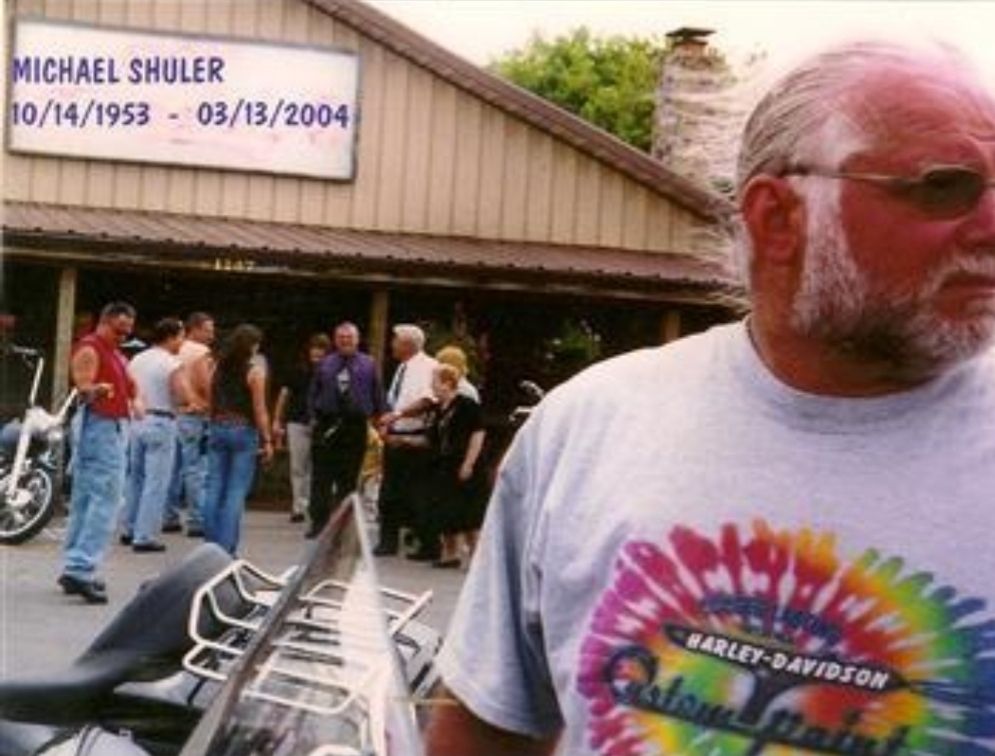
Some of the folks I became friends with at Conway include Harmon Pinkstaff, Jerry Hulett, Gregg Turner, Scott Griffin, John Wilson, and John Rathburn—just to name a few. But there’s one person I met on my very first day at Conway who stood out from all the rest: Mike Shuler.

This man touched my heart and my soul. He quickly became my best friend—almost from the very first conversation. He’s the kind of person you meet once in a lifetime.

You’ll learn more about Mike in the next chapter, as it will be dedicated entirely to him and his memory.

Thank you for reading, and I truly hope you’ll continue with me. The last two chapters still have a lot to share.

“`


#FriendsForALifetime #TruckingFriends #ConwayCentralExpress #LongLastingFriendships #TruckingCommunity #LifeOnTheRoad #FriendshipGoals #Memories #DriverLife #WorkRelationships #SocialMediaConnections #TruckersOfInstagram #WorkFamily #TruckingStories #LifelongFriends #IndustryConnections #CareerJourney #WorkAndLife #TruckingLife #FriendshipMatters #HonestConnections #RememberingFriends #TruckDriverStories #WorkHardPlayHard #LifeOnTheRoad #IndustryLegends

Chapter 22: Mike Shuler… Need I Say More

As I mentioned in the previous chapter, Mike and I became best friends instantly upon meeting. Mike was a free spirit—not the kind of man who could be harnessed or boxed in.

During my first year at Conway, I was still living in Indianapolis and was trapped in a difficult relationship. I had no financial resources to escape, and I felt stuck.

Mike had just built himself a house in Plainfield, close to the new Conway terminal. One day, he came by and picked me up in Indy so we could run some errands. During our casual conversation, I opened up and told him I really needed to move and get out of my situation.

He looked at me seriously and said, “Then let’s get you out of there. You can come live with me. We’ll split the expenses.” And he meant it.

Of course, I accepted his offer. I owned a Harley Davidson Heritage Softail Classic, and Mike was so intrigued by it that he built a custom one from the ground up in his garage. Once it was finished, we rode all the time. For two years, I lived with Mike, and then I eventually bought a mobile home in Mooresville, Indiana, and moved there.

Mike was tragically killed on his Harley on March 13, 2004.

For the next three years, his friends—those of us who worked with him—organized memorial rides to his graveside to pay our respects. It’s been 21 years since he left us, and I still miss him every single day.

Friends like that are truly once-in-a-lifetime. As for me? I’ve been blessed twice. The story of my second friendship will be revealed in my next book.

“`


#FriendsForALifetime #MikeShuler #TruckingFriends #Memories #FriendshipGoals #HarleyDavidson #MotorcycleLife #LifeOnTheRoad #TruckingCommunity #FriendshipMatters #MemorialRide #NeverForget #MotorcycleLovers #TruckingStories #LifelongFriendships #Respect #RoadTrip #HarleyLife #FriendshipJourney #TruckingLife #HonoringFriends #MemoriesThatLast #RideForFriends #BikeLife #MotorcycleCommunity #FriendshipLegacy #Blessed

Chapter 23: The Day My World Shifted

On December 10th, 2002, my father passed away. This loss had a tremendous impact on me—as you probably expected after reading the first three chapters of this book. Dad had struggled with congestive heart failure for years. He underwent heart valve replacement surgery in 1992, but the aftermath left him a different man. His health steadily declined, and with it, so did his ability to do the thing he loved most: work.

Dad was a true workaholic. Once that was taken from him by this cruel disease, it was as though his spirit began to fade. Slowly, he lost his will to live.

That morning, I stopped by his house on my way to work—and what I saw, I’ll never forget. He had been prescribed several medications to help his heart valve function properly, and alcohol was absolutely off-limits. But he had reached a point where he no longer cared. He was drinking heavily. That morning, he looked so bad that he was almost unrecognizable. It was heartbreaking.

They were preparing to take him to St. Francis Hospital. I almost called Conway to take the day off and go with him, but he told me not to. He insisted I go on to work. So I did, reluctantly, and it was one of the hardest mornings I’ve ever endured—trying to focus on my route while constantly worrying about him.

Around 2 p.m., dispatch called me on the two-way radio and told me to return to the terminal. My stepmom had contacted them and said I needed to get to the hospital right away—if I wanted to say goodbye.

I was a wreck when I got there.

Even though it was against his wishes, my stepmom made the decision to keep him on life support until my sister could arrive from Florida to say her goodbyes. He passed away at 11 p.m. that night.

I took the five days of bereavement time Conway offered for his private cremation. But the truth is, I wasn’t ready to come back. I should have taken more time—mentally, emotionally, and spiritually, I wasn’t anywhere close to okay.

I’ll end this chapter here, but I want to circle back to something I said at the end of my Overnite segment—about how I didn’t believe I needed the Teamsters Union to protect my job. What happened next proved me wrong, and exposed just how little Conway Central Express valued its employees. The next chapter will show you exactly what I mean.

At Conway, you’re not a person—you’re just a number. And after everything I gave to that company, I regret ever being a part of it.

#MyWorldShifted #FamilyLoss #DadRemembered #GriefJourney #TruckingLife #WorkAndLoss #Memories #Heartfelt #LifeChanging #EmotionalJourney #CaringForFamily #LossOfADad #Bereavement #MovingForward #Resilience #LifeAfterLoss #FamilyMatters #TruckingStories #EmotionalStrength #PersonalJourney #NeverForget #LifeLessons #Heartbreak #FamilyLove #RememberingDad #Tribute #HealingJourney #LifeTransitions

Chapter 24: The True Colors Of Conway Central Express

Coming back to work just three days after my father’s funeral was hard. I was emotionally drained, mentally exhausted, and still trying to process everything that had just happened. But as many of us in this business know, the job doesn’t stop—and life sure doesn’t slow down for you to catch your breath.

A couple of days after returning to work, I was given a routine delivery to a company on the southwest side of Indianapolis. I had delivered there before and knew the lot was extremely tight. There was a single industrial chiller positioned in a narrow area of the lot, leaving virtually no room for error.

That day, as I was trying to snake my way through the cramped space, I brushed against that chiller. It wasn’t a full-on collision—just a bump. I got out, checked for damage, and while there was some visible contact, it didn’t appear catastrophic. I immediately reported it to Conway, as was company policy. That was the right thing to do.

Within a couple of hours, I was called in and placed on immediate suspension. I had to surrender my truck keys and was told an investigation would be opened. It was shocking how quickly the situation escalated. I had never before been suspended for an accident in my entire career. The chiller I bumped was already in rough condition—weathered, unsecured, and sitting in a high-traffic area without any barriers. It could’ve been protected. It should’ve been protected.

A few days later, I got the call.

Termination.

No room for discussion. No chance to explain further. Just… done.

That hit hard. I had worked too long, too hard, to be thrown away over a minor accident—especially while I was still grieving. The experience left me stunned and bitter. After all I had given to that company, they couldn’t even extend me the basic human decency of a second chance.

The appeal process was my only remaining hope—and I planned to take full advantage of it.

#TrueColors #ConwayCentralExpress #WorkAndLoss #EmotionalJourney #WorkplaceDrama #TruckingLife #CareerChallenges #AccidentInvestigation #WorkplaceJustice #LifeAfterLoss #Resilience #MovingForward #LifeLessons #TruckDriving #WorkEthics #TruckingStories #NeverGiveUp #OvercomeAdversity #WorkplaceRespect #ProfessionalGrowth #LifeChanging #HandlingAdversity #CareerJourney #TruckersOfInstagram #WorkplaceStruggles #StayStrong #Heartbreak #MovingOn #WorkplaceDrama

Support the Author

If you enjoyed reading A Trucker’s Life: Book Two – The Independent Contractor Years and would like to support my work, I would be deeply grateful for your generosity. Every contribution helps me continue sharing my journey and keeps these stories alive for future readers.

Donation Options

PayPal: paypal.me/jonesg6257

Cash App: $GeraldJones6257

Venmo: @Gerald-Jones-194

Zelle: teddybear_46158@yahoo.com

Chapter 25: The Appeal and the Final Lesson

Before I get into the appeal process and the deeper truth I uncovered about the incident that led to my termination at Conway, I want to make clear just how different their policy was compared to Overnite—especially when it came to supporting drivers through accident.

At Overnite, the rule was simple: three minor accidents in a 12-month period or one catastrophic event, and you were gone. However, they also considered your job performance and safety record. If you had two incidents close together, they would typically remove you from the truck and assign you to the dock until one of the incidents dropped off your record. The bottom line? Overnite fought for their drivers.

Here’s a perfect example I haven’t shared until now: Years ago, I was accused by the U.S. Army of sideswiping one of their military vehicles. They provided the exact date, time, and location and even cited the unit numbers from the equipment I had that day. But Overnite didn’t just accept the accusation at face value. They asked me about it—I denied any involvement—and then they dug in.

Thanks to Overnite’s tattletale clocks with those paper disks (the ones that recorded every stop, start, and speed), they verified my movement. I was in motion during that time but made no stops near the location in question. Still, the Army pushed back. So, Tom Williams, one of our supervisors, went to the Stout Field National Guard base to inspect the damaged vehicle. It was scratched along the side and had blue paint on it. He returned, examined the trailer and tractor I used that day, and found no trace of paint transfer. That was the end of it—the accusation was dropped.

That’s what I mean when I say Overnite stood up for their drivers.

Now contrast that with Conway. Conway’s policy was simple: the more it cost, the more points against you—no context, no debate. The chiller I bumped was over 30 years old, outdated, and completely unprotected. Yet, the customer claimed $40,000 in damages. Conway didn’t push back, didn’t question the age or condition of the unit, and didn’t even request scrap credit, which could have at least lowered the claim and possibly saved my job.

When I filed my appeal, I did my own research. I found out that the chiller I bumped couldn’t be repaired—not because of the damage I caused, but because it was obsolete. No replacement parts were available. It had also been sitting unprotected, directly in a travel lane. No bollards, no railing, not even warning signs. After replacing it, the customer installed a concrete pad, bolted it down, and surrounded it with guardrails—proving it should have been protected from the start.

None of that mattered. I lost the final appeal.

And I walked away with two painful but important lessons. First, if I’d had Teamsters union backing, I believe I would have kept my job. Second, and perhaps even more important, I learned never to blindly trust any company again—not after that experience.

That’s when I decided to take my future into my own hands. I bought my own truck and started working for myself. It was another bitter chapter in a career that had already seen its share of hard knocks. But this one left a mark—not because of the job I lost, but because of what it revealed about the people who signed my paychecks.

And I vowed from that moment on: never again.

Hashtags for WordPress:
#TheFinalLesson #ConwayCentralExpress #CareerTurningPoint #TruckingLife #WorkplaceJustice #LifeLessons #TruckDriving #UnionStrong #WorkplaceRespect #CareerChange #TruckingStories #IndependentTrucker #LifeOnTheRoad #TruckersOfInstagram #DriverRights #WorkplaceTruths #OverniteTransportation #WorkplaceLoyalty #CareerReflections #SelfEmploymentJourney #NeverAgain #TruckingCommunity #WorkEthics #CareerEndingMoments #LifeChangingEvents #TruckingIndustry#AboutTheAuthor